Monthly Archives: July, 2020

Four Reasons Why the Pepsi Challenge Was an Effective Campaign

July 22, 2020 Posted by History of Advertising 0 thoughts on “Four Reasons Why the Pepsi Challenge Was an Effective Campaign”

Pepsi vs Coke: How it all started

The existence of product substitutes inevitably leads to competition. It’s one of the driving forces of commerce. But every once in awhile a competition arises that is so big it turns in to an all-out war. This is what happened when Pepsi came out with its unforgettable Pepsi challenge campaign in the 1970s. 

In a series of advertisements, Pepsi showed real customers choosing Pepsi over Coca-Cola in blind taste tests. These advertisements threatened Coke’s status as the king of Cola and helped level the playing field for the two companies. 

In this blog, I will analyze one of Pepsi’s advertisements and explain why it was so effective at disrupting the reign of Coke and fueling the Cola war fire. 

Why this advertisement works

1. Celebrity endorser 

For you young readers out there like me you probably didn’t notice that the narrator in the commercial was actually a popular celebrity at the time. Gabe Kaplan is an American comedian best known for his role on the sitcom Welcome Back, Kotter, which also starred John Travolta. Kaplan’s presence in this commercial was a strategic decision for Pepsi. 

There has been research and criticism about celebrity endorsers for products saying that people know they are being paid off so it doesn’t seem truthful. In this advertisement though, Kaplan is not just saying he likes the product so you should buy it, he is walking you through the scenes of real people like you vouching for the superior taste of Pepsi.  

2. The use of humor 

On top of Gabe Kaplan lending a familiar face to the commercial to make it more memorable, he also adds the humor. The attention of the viewers will not be held by a narrator who walks them through the commercial in a monotonous way. Kaplan’s humorous and playful attitude holds the attention of the viewer while the commercial changes their perceptions of Pepsi.

Humor in advertisements has also been shown to associate positive emotions elicited from the advertisement with the product and make long-lasting impressions on the viewers. 

3. Testimonials from real people

Testimonials from consumers are a great advertising strategy. It is an effective way for a brand to show the benefits of a product that doesn’t give the viewer the impression that an actor is being paid to read a script. 

The father of modern advertising, Claude Hopkins, was adamant about the redirecting the focus of advertising back to the “common people.” With an everyday consumer good like cola, you don’t want to advertise to a small percentage of wealthy people, you want to advertise to the millions of regular people who will need to decide between Coke or Pepsi the next time they go to the corner store. 

Pepsi’s use of volunteer firefighters, regular old community members, as their experiment group, represents the millions of viewers watching the commercial. 

4. Take the Pepsi challenge 

The slogan that caps off the commercial is “take the Pepsi challenge, let your taste decide.” 

I grew up in the age of the ice bucket challenge and the countless tik tok promotional challenges circulating today, but I did not hear about the Pepsi challenge until I started my research. 

I decided to call up my mom and ask her if she recalls the Pepsi challenge from her youth in the ’80s. She recounted memories of doing the challenge at birthday parties and with friend groups. And she went on to recall the intensity of the great American cola wars that followed. 

Like a viral social media challenge today, the Pepsi challenge raised brand awareness for Pepsi on an unprecedented level and convinced consumers to try the product themselves instead of taking the companies word for it. 

Final thoughts

The Pepsi challenge commercials were an effective way of pushing Pepsi into the spotlight and giving Coke a well-needed challenge. The blending of traditional advertising strategies such as using a celebrity, using tasteful humor, and including real people with the powerful and hard-to-achieve use of a viral challenge made Pepsi the household name it is today. 

About the author

Colin Young is a copywriter at Copper Sun Creative. He specializes in writing advertising and branding content. When he is not blogging or working to complete his bachelor’s degree in Marketing he enjoys doing anything outdoors.
Snickers vs. Oldspice: Conveying Benefit in Commercials

July 11, 2020 Posted by Marketing Advice 0 thoughts on “Snickers vs. Oldspice: Conveying Benefit in Commercials”

Think about why you buy things. You want to get some benefit from the product, right? Buying a certain product makes your life easier or better in some way. Companies are well aware of this desire to gain something from products. Snickers and Old Spice shaped these two entertaining and memorable commercials around this concept. 

Snickers: Super Bowl XLIV 44 2010 commercial

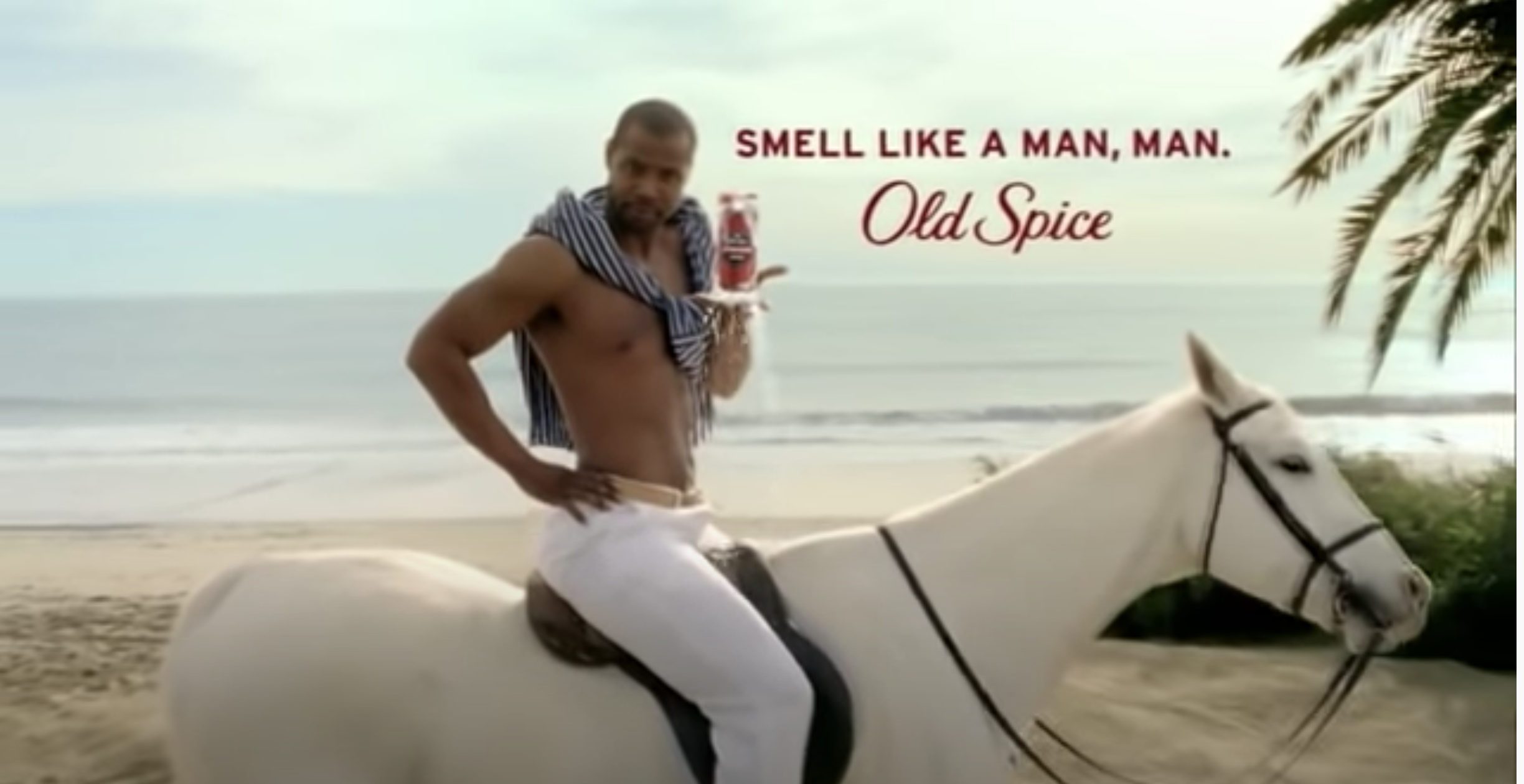
Old Spice: The Man Your Man Could Smell Like commercial 

Both commercials, in their own ways, show how their product can benefit you. If you focus on the message being communicated behind the theatrical displays, they are simply saying, this is what our product will do for you, buy it. 

How Snickers conveys benefit 

For Snickers, their tagline is “You’re not you when you’re hungry.” This brilliant strategy takes a Snickers bar, which is really no different from any other unhealthy candy bar, and shows its benefit to you beyond satisfying a craving. They show how you as a person change when you’re hungry and Snickers can reverse this and make you better. They took a simple candy bar and gave it the benefits of an energy bar. The playfulness and humor in this ad, along with the attention-grabbing and surprising scenes of older actors being tackled into a muddy football field make the message very memorable.  

How Old Spice conveys benefit 

For Old Spice, their commercial was no less fun and entertaining. In contrast to the few sudden attention-grabbing moments in the Snickers commercial, the whole commercial is fast and interactive. Your attention is held by chaotic visuals and the narrator not giving you a chance to look away unless he tells you to. The narrator guides you through the fantastical world of the perfect Old Spice user. 

At the end of the commercial, the narrator slips in the tagline “Anything is possible when your man smells like Old Spice and not a lady.” The commercial is implying that if you use old spice,  you can be like the perfect man in the commercial. The possibilities are endless when you try this product. 

Which commercial is more effective?

The more effective of the two commercials is subjective. When talking about entertainment value or overall effectiveness of the commercials, opinions differ. When focusing on how well the companies communicated the benefit of their products to the consumer, I believe that Snickers takes the cake.

What challenge did both companies face?

Both companies had the task of taking products that offer no real exciting or different benefit that stands out from their competitors. They were challenged with taking relatively unexciting products and making them beneficial to you. What makes the Snickers commercial better is that the benefit they offer is attainable and realistic. 

Why Snickers conveys their benefit better 

Snickers doesn’t need to claim that you will be the most attractive perfect person by using their product. They make a claim that has truth to it even though it was communicated through an impossible and exaggerated story. Old Spice, in contrast, had a great and entertaining commercial that hooked you in for the whole thirty seconds but their claim was too grand. 

You may have skipped breakfast and you grab a Snickers bar while shopping because you remembered that “You’re not you when you’re hungry,” but when you’re eye catches the Old Spice bottle, you may choose it over other brands because you remember how entertaining the commercial was, but you will not grab it in hopes that you can become the perfect man by buying it. 


About the author

Colin Young is a copywriter at Copper Sun Creative. He specializes in writing advertising and branding content. When he is not blogging or working to complete his bachelor’s degree in Marketing he enjoys doing anything outdoors.

What’s Behind the Advertisement: Then and Now

July 11, 2020 Posted by History of Advertising, Marketing Advice 0 thoughts on “What’s Behind the Advertisement: Then and Now”

How consumers behave hasn’t changed much over the years, but the methods of studying it and its prominence in advertising have. As advertising has evolved, so has its relationship with consumer behavior research. In this blog, I will examine the early history of using consumer behavior to advertise and how it is used today. 

The early history of consumer behavior in advertising 

Claude C. Hopkins is known as the father of modern advertising. During his working life, he brought advertising into a new age using scientific methods of selling. Hopkins believed that the sole purpose of advertising was to sell products and using data from actual sales was the only way to get the job done. 

Figure 1. Hopkins figured out through research that people didn’t want to hear about protecting their teeth, they wanted to hear that a product will make their teeth white and beautiful.

Hopkins discovered consumer behavior trends through testing his advertisements himself. He would test different variations of advertisements and run whichever one got the most attention from consumers. He saved many companies millions of dollars by using data to guide advertising decisions instead of guessing which advertisement would work. 

Creativity is not everything 

Many advertisers since Hopkins and even today still rely on their creative instincts to guide their decisions. David Ogilvy, a successor to Hopkins as one of the most influential persons in advertising, was a fervent critic of this baseless view of advertising.

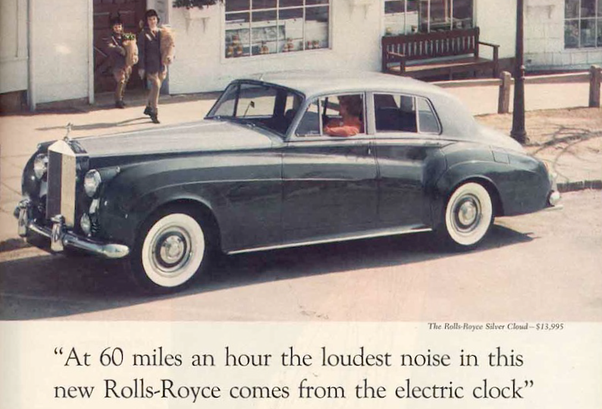
An Ogilvy advertisement is easily recognizable by its simple and many times replicated format. As you can see in the example below, his advertisement layouts were an image, a headline and body copy with black text and white background, from top to bottom. 

Figure 2. Ogilvy crafted this headline around his knowledge that wealthy people wanted peace and quiet while driving.

Ogilvy did this because he knew, through consumer behavior research and experience, that 10% more people will read the headline when it is below the image, and that it is easier for people to read text when it is black with a white background.  

Keep in mind that he did not lack creativity in his advertisements, far from it in fact, but he did not let it guide his work. He figured out what consumers would react to, and only then used a creative touch to make his advertisements stand out. 

Consumer behavior in advertising today 

The fields of consumer behavior and psychology have grown enormously since Ogilvy’s time. As psychology has become more credible as a science, it has been used increasingly in advertising. 

An example of a recent research study on consumer behavior is a study done by Zhang and Bloemer in 2008 on the impact of value congruence on consumer service and brand relationships. This study shows that when consumers share similar values with a brand it leads to more satisfaction, trust and loyalty to that brand.

An example of research like this being used in a campaign is the support of the Black Lives Matter movement by many corporations. Many companies are aligning their brand values with this movement and, in turn, are creating a trusting relationship with consumers who share similar values. 

Figure 3. Ben and Jerry’s is aligning their values with progressives and supporters of the Black Lives Matter movement.

My take

In my opinion, modern advertising should be a balance between the testing methods that Hopkins founded and the modern consumer behavior research that advertisers use today. 

I believe that the principles of Hopkins are important to include because even if a study says consumers will act a certain way, there is no guarantee that it will work for every company in every market. For example, Ben and Jerry’s supporting the Black Lives Matter movement works because they have a history of supporting grassroots progressive movements. If the same tactic was used by Amazon, for example, it may come off as insincere. 

Overall, the study of consumer behavior was a driving force in the creation of modern advertising and the progression of advertising today. The importance of knowing how consumers will react to advertisements is just as important as it was in Hopkins times and it should not be overlooked. 


About the author

Colin Young is a copywriter at Copper Sun Creative. He specializes in writing advertising and branding content. When he is not blogging or working to complete his bachelor’s degree in Marketing he enjoys doing anything outdoors.

How ‘The Worst Hostel in the World’ Built Its Bold Brand Image

July 11, 2020 Posted by Marketing Advice 0 thoughts on “How ‘The Worst Hostel in the World’ Built Its Bold Brand Image”
One of Amsterdam’s many pub-filled streets

I stopped by the hostel my sister was staying at. It was a dingy place with prison-like bunk beds. There was a pub in the basement where the green felt of the pool table was stained grey and black from cigarette smoke and ash and the watery beer was served by the pitcher in opaque plastic cups. 

Appealing to customers with the unappealing 

This is the kind of environment that Hans Brinker hostel, the self-proclaimed “Worst Hostel in the World” prides itself for. Hans Brinker is a budget hostel that has nothing special or welcoming to offer, so they focused on what they had. 

They appealed to their target market, partying young people, through clever advertisements glorifying the unsanitary and bare minimum conditions that they offered. 

The worst hostel in the world 

Hans Brinker began positioning its brand this way in the 90s when they were tired of hearing complaints about how poor the conditions of their hostel were. They had nothing special to offer. Nothing that could differentiate them from competing budget hostels in the area. 

They decided that if the customers expected nothing from them, they wouldn’t complain when they got nothing special from their stay. 

From this idea, Hans Brinker Hostel created a series of hilarious advertisements that both mocked traditional hotel advertising and set realistic expectations for their young audience who could relate to the humor and irony of the ads. 

Hans Brinkers most memorable advertisements 

A very crappy advertisement

The very bold and eye-catching image above was put on small flags and placed in piles of dog poop all around the city of Amsterdam. This guerilla advertising tactic executed by Hans Brinkers employees brought media attention from around the world. 

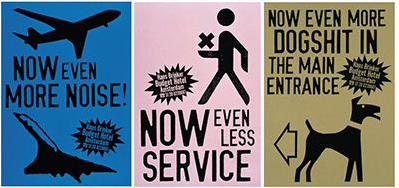
NOW even more clever ads!

Hans Brinker’s series of advertisements mocking old school urgency advertisements

Through these campaigns, Hans Brinkers played off of old school advertising showing urgency. Of course instead of offering outstanding service or pristine rooms they offer the minimum of what is expected or even the most undesirable things associated with hostels. 

The good ole before and after 

One of a series of “before and after” advertisements showing what a night at the Hans Brinker entails

Through many different variations of this advertisement, Hans Brinkers shows their target market, young party-going people, when they check into the hostel and when they check out. This ad shows they want their customers to party and have a good time and quality service and comfort are not to be expected. 

There’s no way this could work, right?

The very unorthodox methods of Hans Brinker Hostel yielded impressive results. Their bookings spiked with the release of advertisements that pointed out what was once viewed as their greatest flaws as a hostel. 

This worked because Hans Brinkers established a consistent brand image with an offer that appealed to their target market. Young students traveling to Amsterdam to party and stay out all night are not looking for a luxury room to relax in. They are looking for the cheapest option that will give them a place to go back to after last call. 

The use of humor and irony in the advertisements also made them relatable for young people who often push back against traditional advertising. 

Hans Brinkers’ brand image didn’t set expectations beyond what they could offer. For this reason, they are still one of the most popular hostels in Amsterdam. 


About the author

Colin Young is a copywriter at Copper Sun Creative. He specializes in writing advertising and branding content. When he is not blogging or working to complete his bachelor’s degree in Marketing he enjoys doing anything outdoors.