

Monthly Archives: February, 2023

The Main Value Proposition: A Vital Concept in Advertising

February 2, 2023 Posted by Marketing Advice 0 thoughts on “The Main Value Proposition: A Vital Concept in Advertising”

Advertising is an essential aspect of business, and it plays a crucial role in the growth and success of a company. To ensure that the advertising campaigns are effective, companies need to focus on creating a strong main value proposition (MVP). In this blog post, we will discuss what MVP is and why it is an important concept in advertising.

What is the Main Value Proposition?

The main value proposition refers to the unique selling point or benefit that a company offers to its customers. It is the key reason why customers choose to do business with a particular company. The MVP is a clear and concise statement that summarizes the benefits that a company provides to its customers. It is the essence of a company’s brand and what sets it apart from its competitors.

Why is the Main Value Proposition Important in Advertising?

The main value proposition is important in advertising because it helps to communicate the value that a company offers to its customers. A strong MVP helps to grab the attention of customers and creates a compelling reason for them to choose a particular product or service. It is the foundation of any advertising campaign, and it helps to guide the messaging and creative direction of the campaign.

A well-defined MVP can also help companies to attract new customers and retain existing ones. It provides a clear understanding of what a company offers, which helps to differentiate it from its competitors. This differentiation helps to build trust and loyalty with customers, which is crucial in a highly competitive marketplace.

How to Develop a Strong Main Value Proposition

Developing a strong MVP can be a challenging task, but it is essential to ensure the success of advertising campaigns. Here are some steps to help you create a strong MVP:

  1. Identify Your Unique Selling Point

The first step in developing a strong MVP is to identify what sets your company apart from its competitors. This could be a unique product feature, a specific benefit, or a different approach to solving a customer problem. It is essential to identify the unique selling point and ensure that it is relevant to your target audience.

  1. Focus on the Benefits

The MVP should focus on the benefits that your product or service offers to your customers. Customers are more likely to be interested in the benefits they will receive, rather than the features of your product. Make sure to highlight the benefits that are most important to your target audience.

  1. Keep it Simple

The MVP should be simple and easy to understand. Avoid using industry jargon or complex language that may confuse your target audience. The MVP should be a clear and concise statement that can be easily remembered and repeated.

  1. Test and Refine

Once you have developed your MVP, it is essential to test it to ensure that it resonates with your target audience. Gather feedback from customers and use it to refine and improve your MVP. This feedback can help to ensure that your MVP accurately reflects the value that your company offers.

Examples of Main Value Proposition

Here are two examples of companies that have strong MVPs:

  1. Nike – “Just Do It”

Nike’s MVP is “Just Do It.” This simple, yet powerful statement communicates the brand’s focus on encouraging customers to pursue their athletic goals and dreams. The MVP resonates with customers who are looking for motivation and inspiration to achieve their goals.

  1. Coca-Cola – “Open Happiness”

Coca-Cola’s MVP is “Open Happiness.” This statement communicates the brand’s focus on providing customers with a sense of joy and happiness through their products. The MVP resonates with customers who are looking for a moment of happiness in their busy lives.
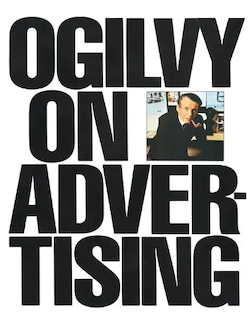
David Ogilvy’s Advice for Advertisers

February 2, 2023 Posted by Marketing Advice 0 thoughts on “David Ogilvy’s Advice for Advertisers”

David Ogilvy, known as the “Father of Advertising,” was a pioneering figure in the advertising industry. He founded the advertising agency Ogilvy & Mather in 1948, which eventually became one of the largest advertising agencies in the world. He was renowned for his innovative approaches to advertising and his ability to craft memorable and effective advertisements. In this blog post, we’ll take a look at some of David Ogilvy’s most valuable advice for advertising.

  1. Know your audience. One of the most fundamental pieces of advice that Ogilvy gave was to understand your target audience. He believed that the key to creating effective advertising was to understand what motivated people to buy products. He once said, “You cannot bore people into buying your product; you can only interest them in buying it.” It’s important to research your audience and understand their needs, desires, and preferences. This will help you craft advertisements that resonate with them and create a stronger connection with your brand.
  2. Be creative. Ogilvy believed that creativity was the key to successful advertising. He encouraged his team to think outside the box and find new and innovative ways to reach their target audience. He famously said, “If it doesn’t sell, it isn’t creative.” While creativity is important, it must also be backed up by strategy and a strong message. This combination of creativity and strategy will result in advertisements that not only grab people’s attention, but also make them want to take action.
  3. Focus on benefits, not features. Ogilvy believed that advertisements should focus on the benefits of a product, rather than its features. People are more interested in how a product will make their lives better, not just the technical details. By focusing on the benefits, you’ll create advertisements that are more appealing and engaging to your target audience.
  4. Use attention-grabbing headlines. The headline of an advertisement is often the first thing that people see, so it’s important to make it count. Ogilvy believed that headlines should be attention-grabbing, memorable, and relevant to the target audience. He encouraged his team to spend as much time on the headline as they did on the rest of the advertisement. A good headline can be the difference between someone ignoring an advertisement or becoming interested in a product.
  5. Show, don’t tell. Ogilvy believed that advertisements should show people what a product can do, rather than just telling them. By using visuals, you can create advertisements that are more memorable and impactful. Visuals can also help to clarify complex messages and make products more appealing.
  6. Keep it simple. Ogilvy believed that advertisements should be simple and straightforward. He encouraged his team to avoid using technical jargon and to keep messages as clear and concise as possible. Simple messages are easier for people to understand and more likely to stick in their minds.
  7. Test and refine. Ogilvy believed that advertisements should be tested and refined until they are as effective as possible. He encouraged his team to test different versions of advertisements to see what resonated with their target audience and what didn’t. By testing and refining advertisements, you can create ads that are more effective and reach more people.
  8. Focus on the long-term. Ogilvy believed that successful advertising was about creating long-term relationships with customers. He encouraged his team to focus on building a brand that people trust and respect, rather than just trying to make a quick sale. By focusing on the long-term, you’ll create advertisements that are more impactful and effective in the long run.

In conclusion, David Ogilvy’s advice for advertising is still relevant today. By understanding your target audience