
Throughout the relatively brief history of advertising and even today, people believe that there is no scientific basis for advertising decisions. Despite the millions of dollars being thrown at advertisers, people often believe that the effectiveness of the advertiser is solely based on their creativity and cleverness.
Although creativity and cleverness can be good assets for an advertiser, your advertisement cannot be proven effective unless it is tested against other advertisements or is based on formulas derived from previous tests.
Because it is often time-consuming and expensive to test ads, this list gives formulas that have already been proven to either spark curiosity, self-interest or other responses that lead people to want to learn more.
Where do these formulas come from?
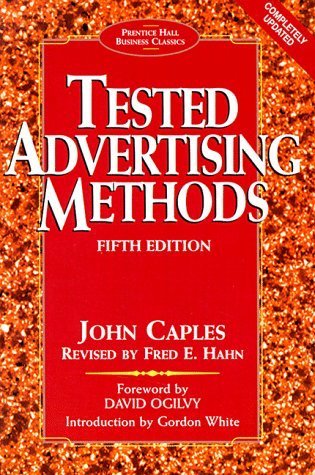
As a newcomer to marketing and advertising, I can’t say that I’ve tested these formulas myself and proven their effectiveness in headlines. These formulas were tested and practiced by the renowned copywriter John Caples and sourced directly from his book, Tested Advertising Methods, which goes in-depth on a wide range of copywriting strategies.
These keywords are just as effective as they were in 1932 when Caples published his book. If you don’t believe me, keep a copy of this list on your computer and compare it with all the headlines that entice you to click on them or keep reading.
35 effective headline keywords
Begin your headline with the words:
- “How To”
- “How”
- “Why”
- “Which”
- “Who Else”
- “Wanted”
- “This”
- “Because”
- “If”
- “Advice”
- New
- Now
- At last
More techniques
- Use a Testimonial Headline
- Offer the Reader a Test (Can Your Kitchen Pass the Guest Test?)
- Offer Information in Value
- Tell a Story
- Warn the Reader to Delay Buying “Don’t buy a new dishwasher until you’ve considered Bosch”
- Let the Advertiser Speak Directly to the Reader (Write the entire ad in the first person and speak directly to the reader)
- Address Your Headline to Specific Person or Group (Women over 50…”
- Have Your Headline Ask a Question (Do you have trouble sleeping at night?)
- Offer Benefits Through Facts and Figures
- Begin Your Headline with the Word “Introducing”
- Begin Your Headline with the Word “Announcing”
- Use Words that Have an Announcement Quality (Finally, Presenting, Just Released, etc)
- Put a Date Into Your Headline (On February 17 you’ll change your life)
- Write Your Headline In News Style (New hand soap takes the midwest by storm”
- Feature the Price in Your Headline
- Feature Reduced Price
- Feature a Special Merchandising Offer
- Feature an Easy Payment Plan
- Feature a Free Offer
- Use a One Word Headline (Fraud)
- Use a Two Word Headline (Stop Fraud)
- Use a Three Word Headline (Stop Fraud Cold)
Tested formulas remain effective
Caples describes advertising formulas as selling ideas that have worked again and again in the past and can be expected to continue to get results in the future.
These formulas and the results they have been proven to bring are based in human nature. Even if they were originally tested as newspaper headlines they will still work as article headlines on a website.
Applying these formulas in practice
Caples clarifies that these formulas are not as concrete as mathematical formulas. They can work for your specific headline or they could not and they could also be reworked and modified to fit your headline.
These also aren’t the only formulas for writing headlines. New formulas are being invented constantly and if you have the resources and time you can come up with new and effective formulas yourself.
Lastly, Caples points out that these formulas are not meant to hamper your creative thinking, but rather to guide your thinking into profitable channels. They are not meant to be used as a crutch but as a springboard.

About the author
Colin Young is a copywriter at Copper Sun Creative. He specializes in writing advertising and branding content. When he is not blogging or working to complete his bachelor’s degree in Marketing he enjoys doing anything outdoors.