Posts by accounts@coppersuncreative.com

Screenshot of the brass transcripts website logo. It says brass transcripts by Copper Sun.

Introducing BrassTranscripts: Smart, Affordable Transcription for Busy Teams

August 27, 2025 Posted by Marketing Advice 0 thoughts on “Introducing BrassTranscripts: Smart, Affordable Transcription for Busy Teams”

Marketers and researchers spend hours capturing insight-rich conversations—expert interviews, customer calls, stakeholder roundtables, internal strategy sessions. And more often than not, those recordings sit in a shared drive collecting digital dust because… well, transcribing them is a pain.

Screenshot of the brass transcripts website logo. It says brass transcripts by Copper Sun.

Automated tools are fast but sloppy. Manual cleanup is slow and mind-numbing. And most transcription services? Built for compliance, not content teams.

That’s why we helped launch BrassTranscripts—a fast, human-reviewed transcription service designed specifically for marketing and research workflows. No bloat, no jargon, no AI hallucinations. Just clean, reliable transcripts delivered in record time.

Why We Built BrassTranscripts

As a content studio, we live in transcripts. Interviews, podcasts, panels, keynotes—we wade through a ton of recorded material to find the gold. And while there are plenty of transcription tools out there, very few get the mix right: accurate, fast, clean, and human-friendly.

BrassTranscripts was built to do just that. It’s a solution for people who value clarity over clutter—especially those in roles where time is short, deadlines are tight, and quoting people accurately actually matters.

What Makes BrassTranscripts Different

Speed without slop
Most files are turned around in 24 hours or less—cleaned, formatted, and labeled. No frantic scrubbing through audio. No deciphering mystery speakers. Just open the doc and start working.

Formatting built for marketers and analysts
You get easy-to-read transcripts with clear speaker labels and timestamped quotes. Plus, BrassTranscripts can deliver in your preferred format—headings, bolded sections, custom templates. It’s designed to feel like something you’d actually want to drop into a deck or campaign brief.

People-first accuracy
Unlike raw AI transcripts, BrassTranscripts documents are reviewed by humans who understand sentence structure, tone, and clarity. The result? Way fewer “[inaudible]”s and a much more readable document.

Simple, flat pricing
No usage tiers. No surprise fees. Just a clear per-minute rate that makes budgeting easy.
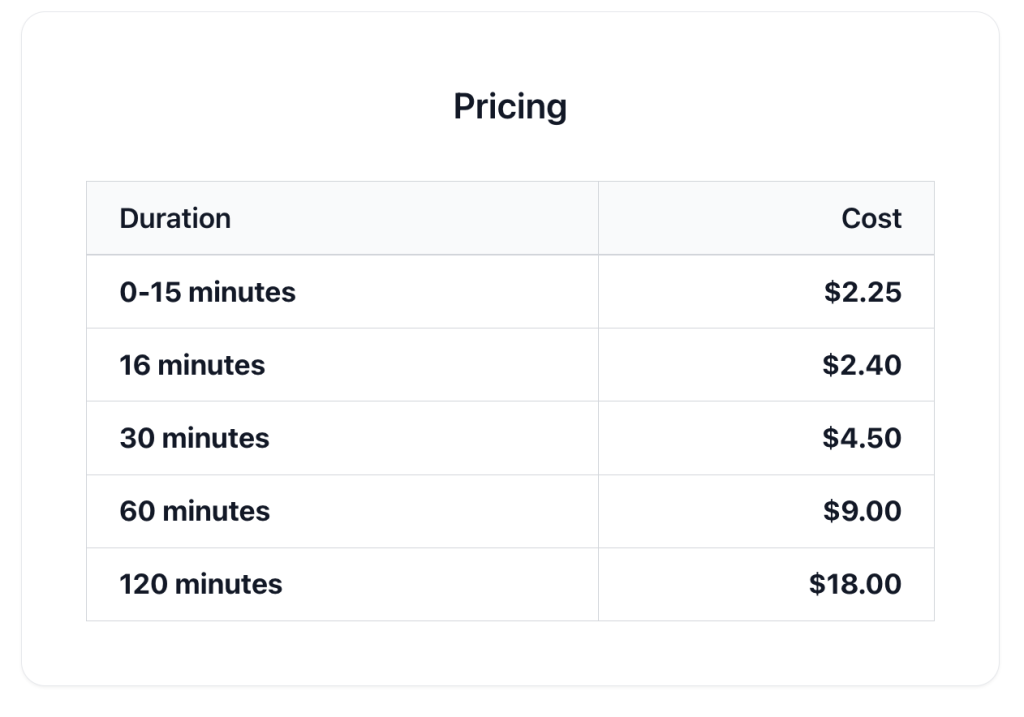
A pricing table for brass transcripts. It says pricing across the top. The first row has two columns duration and cost. Below that are the pricing rows 0 to 15 minutes is $2.25 16 is $2.40 and then it goes up by $.15 a minute.
Affordable pricing with no accounts needed.

Drag-and-drop upload
You don’t need to create an account or learn new software. Upload your file, add a note if needed, and you’re off.

For the Teams Who Actually Use the Transcripts

BrassTranscripts isn’t trying to be a one-size-fits-all solution. It’s focused on a very specific group: people who use transcripts as a daily tool—not a legal formality.

  • Marketing teams can pull ready-to-quote insights from SME interviews without wasting time cleaning up AI output.
  • Content strategists can scan transcripts for structure and story, not just raw text.
  • Researchers can get clean, speaker-tagged material to annotate, summarize, and analyze.
  • Agencies can share professionally formatted transcripts with clients—no apologies necessary.

It’s transcription that actually supports your workflow, instead of slowing it down.
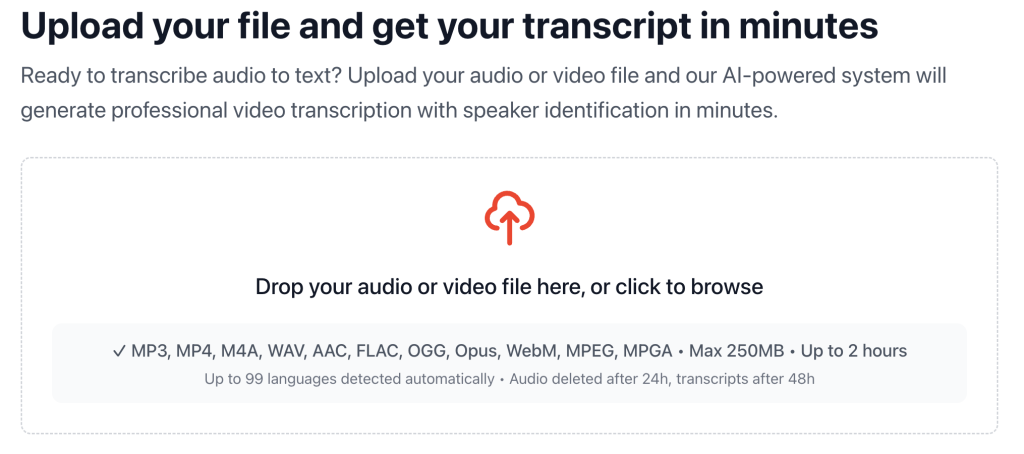

The image shows the upload file section of the brass transcripts transcripts page.
Transcription is easy, simply upload your file and you’ll get a 30 word preview before you decide to pay.

Built for Speed. Backed by Humans. Ready When You Are.

BrassTranscripts is already helping content and research teams get more from their recordings—and get their time back in the process. If your current process involves frustration, filler, or frantic rewinds, it might be time for a better way.

See how BrassTranscripts can clean up your content pipeline at brasstranscripts.com.

The Main Value Proposition: A Vital Concept in Advertising

February 2, 2023 Posted by Marketing Advice 0 thoughts on “The Main Value Proposition: A Vital Concept in Advertising”

Advertising is an essential aspect of business, and it plays a crucial role in the growth and success of a company. To ensure that the advertising campaigns are effective, companies need to focus on creating a strong main value proposition (MVP). In this blog post, we will discuss what MVP is and why it is an important concept in advertising.

What is the Main Value Proposition?

The main value proposition refers to the unique selling point or benefit that a company offers to its customers. It is the key reason why customers choose to do business with a particular company. The MVP is a clear and concise statement that summarizes the benefits that a company provides to its customers. It is the essence of a company’s brand and what sets it apart from its competitors.

Why is the Main Value Proposition Important in Advertising?

The main value proposition is important in advertising because it helps to communicate the value that a company offers to its customers. A strong MVP helps to grab the attention of customers and creates a compelling reason for them to choose a particular product or service. It is the foundation of any advertising campaign, and it helps to guide the messaging and creative direction of the campaign.

A well-defined MVP can also help companies to attract new customers and retain existing ones. It provides a clear understanding of what a company offers, which helps to differentiate it from its competitors. This differentiation helps to build trust and loyalty with customers, which is crucial in a highly competitive marketplace.

How to Develop a Strong Main Value Proposition

Developing a strong MVP can be a challenging task, but it is essential to ensure the success of advertising campaigns. Here are some steps to help you create a strong MVP:

  1. Identify Your Unique Selling Point

The first step in developing a strong MVP is to identify what sets your company apart from its competitors. This could be a unique product feature, a specific benefit, or a different approach to solving a customer problem. It is essential to identify the unique selling point and ensure that it is relevant to your target audience.

  1. Focus on the Benefits

The MVP should focus on the benefits that your product or service offers to your customers. Customers are more likely to be interested in the benefits they will receive, rather than the features of your product. Make sure to highlight the benefits that are most important to your target audience.

  1. Keep it Simple

The MVP should be simple and easy to understand. Avoid using industry jargon or complex language that may confuse your target audience. The MVP should be a clear and concise statement that can be easily remembered and repeated.

  1. Test and Refine

Once you have developed your MVP, it is essential to test it to ensure that it resonates with your target audience. Gather feedback from customers and use it to refine and improve your MVP. This feedback can help to ensure that your MVP accurately reflects the value that your company offers.

Examples of Main Value Proposition

Here are two examples of companies that have strong MVPs:

  1. Nike – “Just Do It”

Nike’s MVP is “Just Do It.” This simple, yet powerful statement communicates the brand’s focus on encouraging customers to pursue their athletic goals and dreams. The MVP resonates with customers who are looking for motivation and inspiration to achieve their goals.

  1. Coca-Cola – “Open Happiness”

Coca-Cola’s MVP is “Open Happiness.” This statement communicates the brand’s focus on providing customers with a sense of joy and happiness through their products. The MVP resonates with customers who are looking for a moment of happiness in their busy lives.

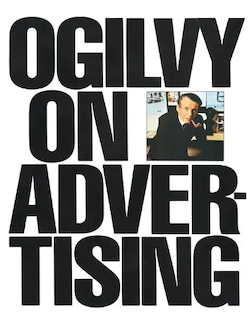
David Ogilvy’s Advice for Advertisers

February 2, 2023 Posted by Marketing Advice 0 thoughts on “David Ogilvy’s Advice for Advertisers”

David Ogilvy, known as the “Father of Advertising,” was a pioneering figure in the advertising industry. He founded the advertising agency Ogilvy & Mather in 1948, which eventually became one of the largest advertising agencies in the world. He was renowned for his innovative approaches to advertising and his ability to craft memorable and effective advertisements. In this blog post, we’ll take a look at some of David Ogilvy’s most valuable advice for advertising.

  1. Know your audience. One of the most fundamental pieces of advice that Ogilvy gave was to understand your target audience. He believed that the key to creating effective advertising was to understand what motivated people to buy products. He once said, “You cannot bore people into buying your product; you can only interest them in buying it.” It’s important to research your audience and understand their needs, desires, and preferences. This will help you craft advertisements that resonate with them and create a stronger connection with your brand.
  2. Be creative. Ogilvy believed that creativity was the key to successful advertising. He encouraged his team to think outside the box and find new and innovative ways to reach their target audience. He famously said, “If it doesn’t sell, it isn’t creative.” While creativity is important, it must also be backed up by strategy and a strong message. This combination of creativity and strategy will result in advertisements that not only grab people’s attention, but also make them want to take action.
  3. Focus on benefits, not features. Ogilvy believed that advertisements should focus on the benefits of a product, rather than its features. People are more interested in how a product will make their lives better, not just the technical details. By focusing on the benefits, you’ll create advertisements that are more appealing and engaging to your target audience.
  4. Use attention-grabbing headlines. The headline of an advertisement is often the first thing that people see, so it’s important to make it count. Ogilvy believed that headlines should be attention-grabbing, memorable, and relevant to the target audience. He encouraged his team to spend as much time on the headline as they did on the rest of the advertisement. A good headline can be the difference between someone ignoring an advertisement or becoming interested in a product.
  5. Show, don’t tell. Ogilvy believed that advertisements should show people what a product can do, rather than just telling them. By using visuals, you can create advertisements that are more memorable and impactful. Visuals can also help to clarify complex messages and make products more appealing.
  6. Keep it simple. Ogilvy believed that advertisements should be simple and straightforward. He encouraged his team to avoid using technical jargon and to keep messages as clear and concise as possible. Simple messages are easier for people to understand and more likely to stick in their minds.
  7. Test and refine. Ogilvy believed that advertisements should be tested and refined until they are as effective as possible. He encouraged his team to test different versions of advertisements to see what resonated with their target audience and what didn’t. By testing and refining advertisements, you can create ads that are more effective and reach more people.
  8. Focus on the long-term. Ogilvy believed that successful advertising was about creating long-term relationships with customers. He encouraged his team to focus on building a brand that people trust and respect, rather than just trying to make a quick sale. By focusing on the long-term, you’ll create advertisements that are more impactful and effective in the long run.

In conclusion, David Ogilvy’s advice for advertising is still relevant today. By understanding your target audience

How to Write Website Content that Sells

April 4, 2020 Posted by Marketing Advice 0 thoughts on “How to Write Website Content that Sells”

Writing web content can be a tricky task. The idea is to write copy for what your customers want, not what you want. Try these tips.

What do customer want?

Customers want answers. They want facts, features, benefits, prices. They hate marketese and useless fluff. If you take away one idea today, let it be: Focus content on your customer!

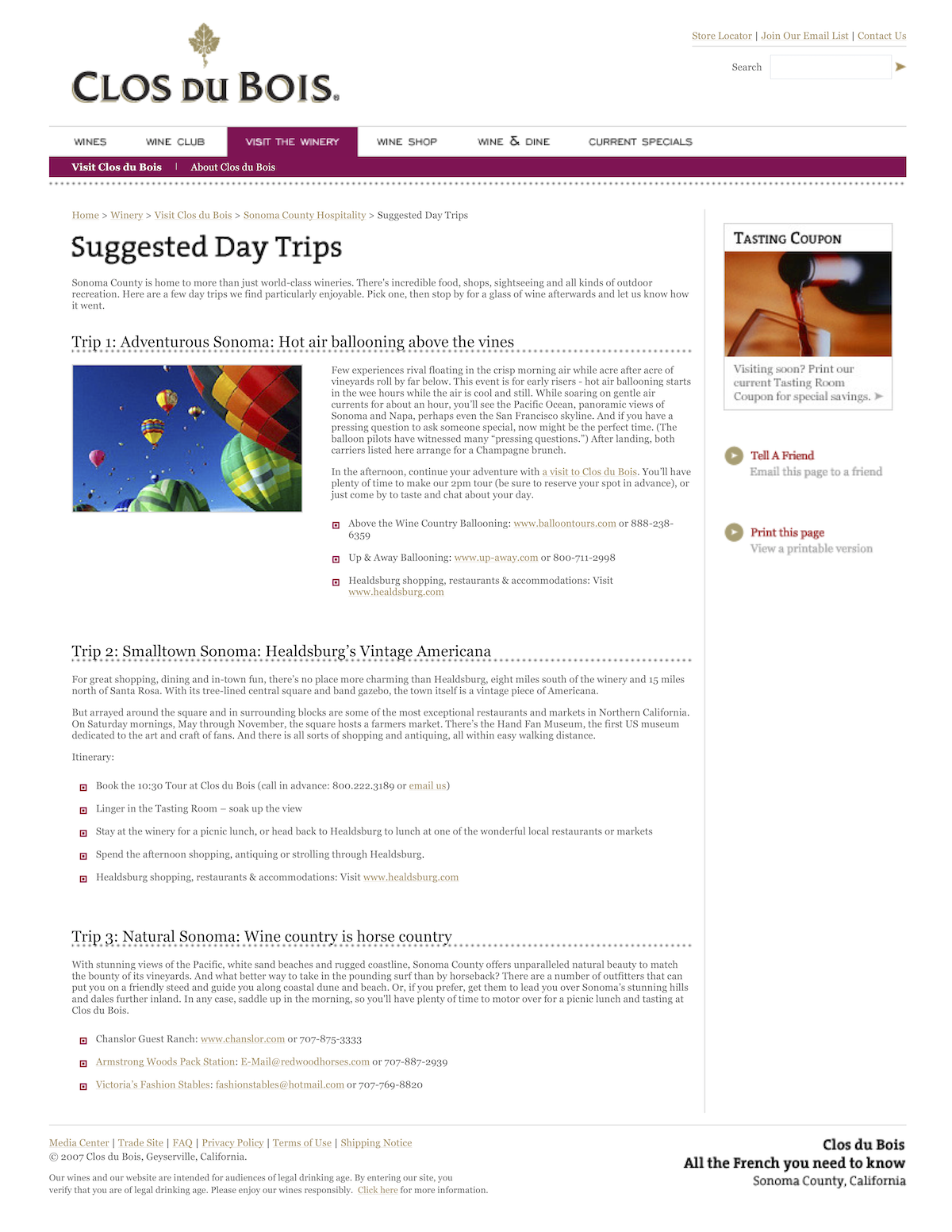
Figure 1. For Clos du Bois we prepared a series of website articles to demystify wine culture. Start with day trips in California’s wine country. (Hence sunrise balloon rides and a wine-country town square.) Click for full PDF.

Questions to ask

Before writing, ask three questions:

  • Who is our target customer?
  • What do they want to know?
  • How will se get them that information?

No company news on homepages

Avoid putting company news on homepages, especially press releases. Customers do not care about your news that you hired a new CFO. Besides, who has the time to prepare fresh press releases?

Assume nothing

You know your business, but customers don’t. Write as if they’ve never heard of you. Avoid industry-insider jargon, and be clear.

Web is for action

The web is an action-oriented medium. People want to get things done. Keep that in mind when designing your navigation.

Don’t’ steal content

Surfing great sites for ideas is a long web tradition. Just don’t steal content—that’s copyright infringement.

Facts, not fluff

Ever read a company mission statement? A horrible experience, isn’t it? Customers want useful information. So get a clue and leave out the marketing garbage.

Make it scannable

Online, people don’t read, they scan:

  • Break up long paragraphs
  • Use bullets and numbered lists
  • One topic per paragraph

Headlines and subheads—Yes!

Aid scanning with lots of headlines and subheads. Be clear and obvious; not clever, funny, or ironic. Research shows 6-8 words best conveys your point.

Links that work

How about links? Use keywords to telegraph what’s on the next page. 7-12 words gives  customers enough to make good choices. Make sure the next page delivers on the promise.

Graphics

Graphics can add visual interest to the sea of words on most web pages. Good graphics offer new information that’s related to the text; they do not merely repeat the text.

Use a call to action today!

Too many web pages leave customers hanging without a next step. So include a call to action on every page. Download a whitepaper, order a service, get product support as examples.

Delete!

Ruthlessly delete unnecessary content.

Spell check

Spell checking is like wearing a seatbelt: you’re a numbskull if you don’t.

Contact information

Many webmasters say contact and support information is highly valued by customers. Include it on each page.

Test!

Going live without usability testing is begging to fail. Build testing into your development process and budget. You won’t regret it.

Try these books

Facts You Should Know About Headlines

April 4, 2020 Posted by Marketing Advice 0 thoughts on “Facts You Should Know About Headlines”

Copper Sun has written hundreds of headlines over the years. Some good, some great, and some best not remembered.

But that’s how it works: write many headlines to pick just a few. Here are some facts you should know about writing headlines that reach customers.

Headlines matter

Five times as many people read headlines as read body copy. So make them count!

Long ain’t bad…

It’s a myth that customers won’t read long headlines. Research shows long headlines that are crafted well can outperform shorter ones.

…But no blind headlines

Blind headlines do not mention the product, company, benefit, offer, promise—anything of value to customers. Toss them out.

Humor is hard

Writing humor is a difficult task best reserved for specialists.

‘You,’ ‘FREE,’ ‘now’

Use the most magical three words in advertising.

Localize

If possible, mention the local city or region in your headline.

Three headlines that work

1. Promise useful information

Most people love to learn something new. Give them tips, advice, facts. Not convinced? Then why are your reading this?

2. Self-interest with curiosity

An element of curiosity mixed with customers’ self-interest tend to pull well.

3. News

Headlines with news tend to do well. Use words like ‘announcing’ or ‘introducing.’

A note on shock value

Many writers mistakenly try to shock readers with clever, snarky, or gotcha  headlines. Shock may get attention, but customers oftentimes feel empty afterward (or worse, betrayed) .

Motivate with time limits

Setting a time limit on an offer is a proven way to get customers to act.

Specifics work better than generics

Vague generalities rarely do well with customers. Be specific by using facts, data, and real numbers. And avoid claims like Quality you can’t beat’ or ‘Experts in Auto Repair.’

“Add some quotes”

Research shows putting quotes around a headline increases reader recall by 28%.

Mention your brand

The headline may be the only part of an ad customers read, so try to include the brand.

Advice to an Ad Agency Hiring Manager

April 4, 2020 Posted by Marketing Advice 0 thoughts on “Advice to an Ad Agency Hiring Manager”

Hiring freelance copywriters can seem like a shot in the dark. So, how can you measure writing skill and professionalism? Here is some free advice on hiring a good copywriter.

Read the copy!

Many hiring managers actually skip reading the prospect’s copy. Bad idea, you’re hiring a writer — yes? Check these four areas.

Simple concepts?

Writing clear messages depends upon clear thinking — and simple concepts.Headlines

Headlines are by far the most crucial part of ad writing. Do they work? (Watch for blind headlines that don’t mention the product, brand, company, offer, etc.)

The lead matters too

After headlines, the lead sentence is critical — and tough to get right. Do the prospect’s leads pique your interest?

Facts, not claims

Good copywriters prove points with facts, not claims. Spot a claim by its reliance on unfounded opinion and squishy language.

Check backgrounds

Besides evaluating writing skills, a hiring manager should check backgrounds. Consider these six tips.

Talk to references

Ask: Was he or she on time? Worth the rate? Would you hire him or her again?

Any sales experience?

Advertising copywriting is sales, not literature. Give the prospect a plus if they have sales experience.

Journalism?

Journalism teaches writers to ask the right questions. That’s valuable for nailing messages and crafting story appeal.

Do degrees matter?

Maybe…but writing experience matters more.

Smile at…

A tidy website and resume, a professional manner and dress, returned phone calls and emails, hand-written thank-you cards.

…But avoid

Packed schedules, unreasonable demands, personal turmoil. And always trust your instincts.

Before they arrive

Get organized! Make sure his or her assignments are clear. Designate supervisors, workspace, and schedules. And provide the resources needed to succeed.

Should you sign a contract?

Yes, always. Contracts protect both parties from each other—and from third parties.

Evaluate

When the writer’s assignment is finished, evaluate them. Did they complete their assignment? Was their writing good? What about their professionalism?

Hire their friends

If you’re happy with your writer, ask him or her to recommend other professionals.