Posts in Advertising Book Reviews

35 Proven Formulas for Writing Headlines

October 1, 2020 Posted by Advertising Book Reviews, History of Advertising, Marketing Advice 0 thoughts on “35 Proven Formulas for Writing Headlines”
Throughout the relatively brief history of advertising and even today, people believe that there is no scientific basis for advertising decisions. Despite the millions of dollars being thrown at advertisers, people often believe that the effectiveness of the advertiser is solely based on their creativity and cleverness.

Although creativity and cleverness can be good assets for an advertiser, your advertisement cannot be proven effective unless it is tested against other advertisements or is based on formulas derived from previous tests.

Because it is often time-consuming and expensive to test ads, this list gives formulas that have already been proven to either spark curiosity, self-interest or other responses that lead people to want to learn more.

Where do these formulas come from?

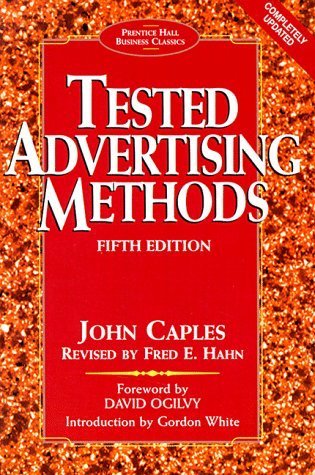
As a newcomer to marketing and advertising, I can’t say that I’ve tested these formulas myself and proven their effectiveness in headlines. These formulas were tested and practiced by the renowned copywriter John Caples and sourced directly from his book, Tested Advertising Methods, which goes in-depth on a wide range of copywriting strategies. 

These keywords are just as effective as they were in 1932 when Caples published his book. If you don’t believe me, keep a copy of this list on your computer and compare it with all the headlines that entice you to click on them or keep reading. 

35 effective headline keywords

Begin your headline with the words:

  1. “How To”
  2. “How”
  3.  “Why”
  4. “Which”
  5. “Who Else”
  6. “Wanted”
  7. “This”
  8. “Because”
  9. “If”
  10. “Advice”
  11. New
  12. Now
  13. At last

More techniques

  1. Use a Testimonial Headline
  2. Offer the Reader a Test (Can Your Kitchen Pass the Guest Test?)
  3. Offer Information in Value
  4. Tell a Story
  5. Warn the Reader to Delay Buying “Don’t buy a new dishwasher until you’ve considered Bosch”
  6. Let the Advertiser Speak Directly to the Reader (Write the entire ad in the first person and speak directly to the reader)
  7. Address Your Headline to Specific Person or Group (Women over 50…”
  8. Have Your Headline Ask a Question (Do you have trouble sleeping at night?)
  9. Offer Benefits Through Facts and Figures
  10. Begin Your Headline with the Word “Introducing”
  11. Begin Your Headline with the Word “Announcing”
  12. Use Words that Have an Announcement Quality (Finally, Presenting, Just Released, etc)
  13. Put a Date Into Your Headline (On February 17 you’ll change your life)
  14. Write Your Headline In News Style (New hand soap takes the midwest by storm”
  15. Feature the Price in Your Headline
  16. Feature Reduced Price
  17. Feature a Special Merchandising Offer
  18. Feature an Easy Payment Plan
  19. Feature a Free Offer
  20. Use a One Word Headline (Fraud)
  21. Use a Two Word Headline (Stop Fraud)
  22. Use a Three Word Headline (Stop Fraud Cold)

Tested formulas remain effective

Caples describes advertising formulas as selling ideas that have worked again and again in the past and can be expected to continue to get results in the future. 

These formulas and the results they have been proven to bring are based in human nature. Even if they were originally tested as newspaper headlines they will still work as article headlines on a website. 

Applying these formulas in practice

Caples clarifies that these formulas are not as concrete as mathematical formulas. They can work for your specific headline or they could not and they could also be reworked and modified to fit your headline. 

These also aren’t the only formulas for writing headlines. New formulas are being invented constantly and if you have the resources and time you can come up with new and effective formulas yourself. 

Lastly, Caples points out that these formulas are not meant to hamper your creative thinking, but rather to guide your thinking into profitable channels. They are not meant to be used as a crutch but as a springboard.

About the author

Colin Young is a copywriter at Copper Sun Creative. He specializes in writing advertising and branding content. When he is not blogging or working to complete his bachelor’s degree in Marketing he enjoys doing anything outdoors.
What Is Scientific Advertising?

June 18, 2020 Posted by Advertising Book Reviews, History of Advertising 0 thoughts on “What Is Scientific Advertising?”
Inside you’ll find the secrets of advertising from the original master of the craft.

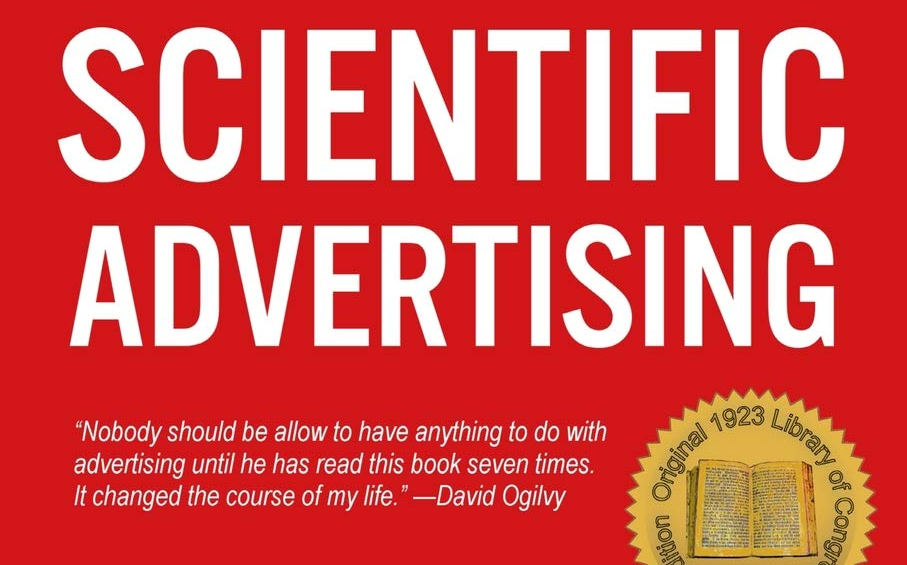
Scientific Advertising was written by the renowned advertiser Claude C Hopkins in 1923. Hopkins is known by many as the father of advertising. Through a lifetime of revolutionary work, Hopkins developed unprecedented strategies to advertise effectively without taking huge financial risks. He lists out his most important strategies for advertising in a scientific and reliable way. In Scientific Advertising Hopkins shares his secrets to advertising success with the world. 

Why read this book?

As the end of my college career is in sight, I am preparing to dive into the workforce. As a marketing major with an interest in advertising and copywriting I am struggling to identify and focus on coursework that will help me excel in my career. 

“The man who wins out and survives does so only because of superior science and strategy.”

– Claude Hopkins 

Marketing literature and college courses will flood you with a lot of information, but it is often difficult to see the bigger picture and use this information in practice. Scientific Advertising helped me set a solid foundation of advertising knowledge to build off of. 

Hopkins neatly organizes the book by chapters that briefly but thoroughly explain each strategy that he feels are essential for effective advertising. This spares you the task of trying to identify what’s important in your marketing textbooks. 

Scientific Advertising is not just important for people starting their careers. No matter where you are in your career in marketing or advertising, this book is a valuable asset. Even if you are an experienced advertiser, it can only help to go back to the main principles that advertising is based on.

Claude C Hopkins - Alchetron, The Free Social Encyclopedia
The grandfather of Advertising himself, Claude C. Hopkins

What are Hopkins’ strategies, and why should I care about them?

I have praised the advertising strategies in this book enough, it’s about time I tell you what they are.

The book’s twenty-one chapters each focus on a strategy or principle of advertising Hopkins deems essential. He shares short anecdotes about his most successful campaigns and how he discovered which strategies worked and which didn’t. He ties off each chapter by summarizing why each strategy matters. 

Here are three of the strategies I think are the most important. The rest you will have to discover yourself. 

#1. Advertising is data- and results-driven 

The main overarching strategy is using data and results to guide advertising 

When Hopkins first entered the field, advertising was new and mostly based on gut feelings and guesswork. Hopkins revolutionized the field by using testing and data to see which advertisements led to sales and which ones flopped.

This, as he repeatedly states, can save companies millions. By testing advertisements instead of coming up with something clever and running it, you can see how consumers will react. This means you can run a campaign when tests show a positive public response and not run it when consumers were tested and there isn’t much excitement.

#2. The importance of samples 

Hopkins explains how using samples has helped him save companies on the verge of bankruptcy, and how no matter the cost of sampling, it will probably still be the cheapest method of advertising.

Hopkins rules for samplings are as follows: Give samples only to interested people who have heard your story, and create an atmosphere of respect, a desire, and an expectation before giving your sample. 

#3. Advertising is just salesmanship 

Hopkins doesn’t let you forget that the point of advertising is to sell products and services. In his mind, the only difference between advertising and salesmanship is the audience. The audience of a salesperson is one person, the audience of an advertisement is thousands or millions.

Hopkins states that there is one way to answer many advertising questions. That way is to ask yourself “Would this help a salesman sell goods?” and “Would it help me sell them if I met a buyer in person?” 

In conclusion…

I hope this post gives you a good idea of what Claud Hopkins discovered throughout his career, and how it is applicable to advertising today, but I urge you to still read the book yourself. There is no mathematical formula for coming up with a great advertisement, but the contents of the book are close to it. If you are interested in advertising or looking to enhance your advertising skills this is the book for you. 


About the author

Colin Young is a copywriter at Copper Sun Creative. He specializes in writing advertising and branding content. When he is not blogging or working to complete his bachelor’s degree in Marketing he enjoys doing anything outdoors.